
What Is Pay-Per-Click? A Complete Beginner’s Guide to PPC Marketing
Table of Contents
If you are exploring what is Pay-Per-Click, you are already taking an important step toward building a successful career in digital marketing. Businesses today compete online for customer attention, and one of the fastest ways to reach potential buyers is through Pay-Per-Click advertising. Whether you want to promote a product, generate leads, or increase website traffic, PPC advertising helps businesses appear at the top of search engine results almost instantly.
Understanding what is Pay-Per-Click is essential for anyone planning to enroll in a digital marketing course. Every modern digital marketer should know how paid advertising works because companies actively hire professionals who can create profitable advertising campaigns on platforms like Google Ads and Microsoft Ads. This guide explains what is Pay-Per-Click, how it works, its benefits, different campaign types, and why learning PPC can open exciting career opportunities.
What Is Pay-Per-Click?
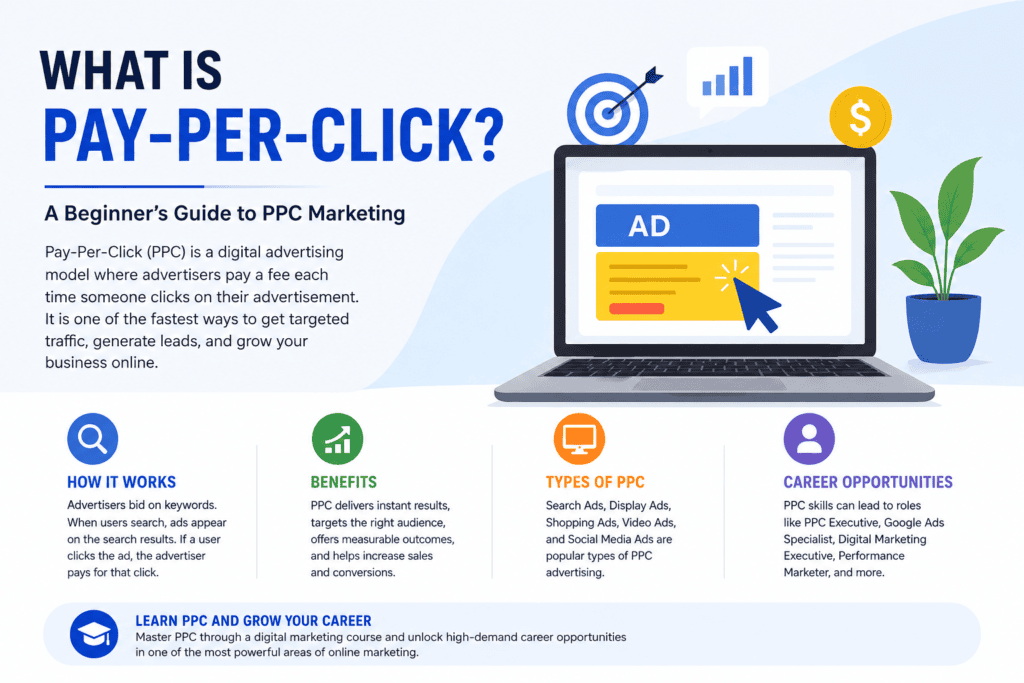
What is Pay-Per-Click? Pay-Per-Click (PPC) is a digital advertising model where advertisers pay a fee each time someone clicks on their advertisement. Instead of earning website visitors organically through Search Engine Optimization (SEO), businesses purchase targeted traffic using paid ads.
When users search for keywords related to a business, PPC advertisements appear above or below the organic search results. Advertisers bid on relevant keywords, and search engines determine which ads appear based on factors like bid amount, ad quality, and landing page experience.
Understanding what is Pay-Per-Click helps businesses generate immediate visibility, attract qualified customers, and increase conversions without waiting months for organic rankings.
How Does Pay-Per-Click Work?
To understand what is Pay-Per-Click, you must first understand how a PPC campaign operates. Businesses begin by researching keywords that potential customers frequently search for online. They then create compelling advertisements and set a budget for their campaigns. When someone searches using those keywords, an automated ad auction determines which advertisements will appear.
The search engine evaluates each advertiser’s bid, Quality Score, ad relevance, expected click-through rate, and landing page quality before deciding ad positions. If a user clicks on the advertisement, the advertiser pays only for that click. This makes PPC one of the most measurable forms of digital advertising because every click, impression, conversion, and cost can be tracked accurately.
Why Is Pay-Per-Click Important?
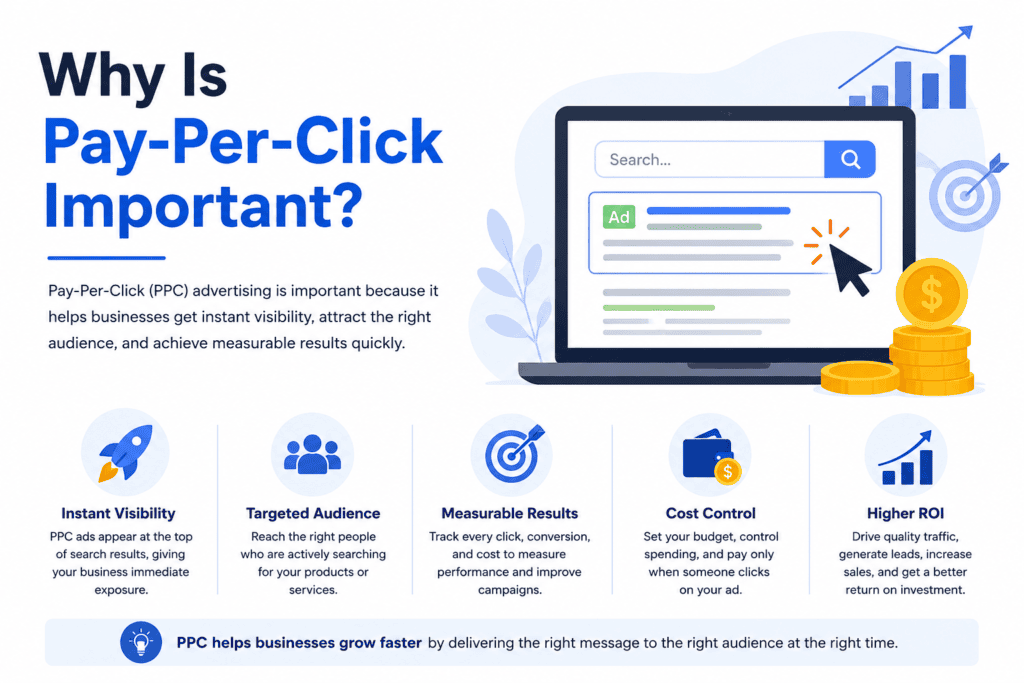
Learning what is Pay-Per-Click is important because PPC provides businesses with instant exposure to customers actively searching for products or services. Unlike SEO, which often requires several months to achieve results, PPC campaigns can begin generating traffic almost immediately after launch.
Businesses also gain complete control over their advertising budget, target audience, geographic locations, devices, demographics, and campaign schedule. Since PPC platforms provide detailed performance analytics, marketers can continuously optimize campaigns to improve return on investment (ROI).
For companies looking to increase leads, sales, and brand awareness quickly, Pay-Per-Click advertising has become an essential part of their digital marketing strategy.
Types of Pay-Per-Click Advertising
There are several forms of PPC advertising available across different digital platforms. Search advertising is the most common type, where text advertisements appear on search engine results pages whenever users search for targeted keywords.
Display advertising shows visually attractive banner ads across websites within advertising networks. Shopping advertisements display product images, prices, and store information directly in search results, making them highly effective for e-commerce businesses.
Video advertising allows businesses to promote products through platforms like YouTube, while social media advertising enables brands to run highly targeted campaigns on Facebook, Instagram, LinkedIn, and other social platforms. Understanding these campaign formats gives marketers greater flexibility when creating successful advertising strategies.
Key Components of a Successful PPC Campaign
A successful PPC campaign depends on several important factors working together effectively. Keyword research forms the foundation because selecting the right search terms ensures advertisements reach the correct audience.
High-quality ad copy attracts attention and encourages users to click. An optimized landing page improves user experience and increases conversion rates. Bid management helps advertisers control costs while remaining competitive in ad auctions.
Quality Score also plays a significant role because search engines reward relevant advertisements with lower costs and better positions. Conversion tracking allows marketers to measure campaign performance and identify opportunities for continuous optimization.
When all these elements are combined effectively, PPC campaigns become highly profitable marketing channels.
Benefits of Learning Pay-Per-Click
Understanding what is Pay-Per-Click offers numerous benefits for students, professionals, entrepreneurs, and business owners. PPC skills are highly valued because businesses constantly invest in paid advertising to generate revenue.
Learning PPC enables you to manage advertising budgets efficiently, increase website traffic, generate qualified leads, improve conversion rates, and analyze campaign performance using advanced marketing tools. It also teaches valuable skills like keyword research, audience targeting, bid optimization, conversion tracking, and data-driven decision-making.
Because digital advertising continues to grow globally, professionals with PPC expertise enjoy excellent career opportunities and competitive salaries.
Pay-Per-Click vs Search Engine Optimization
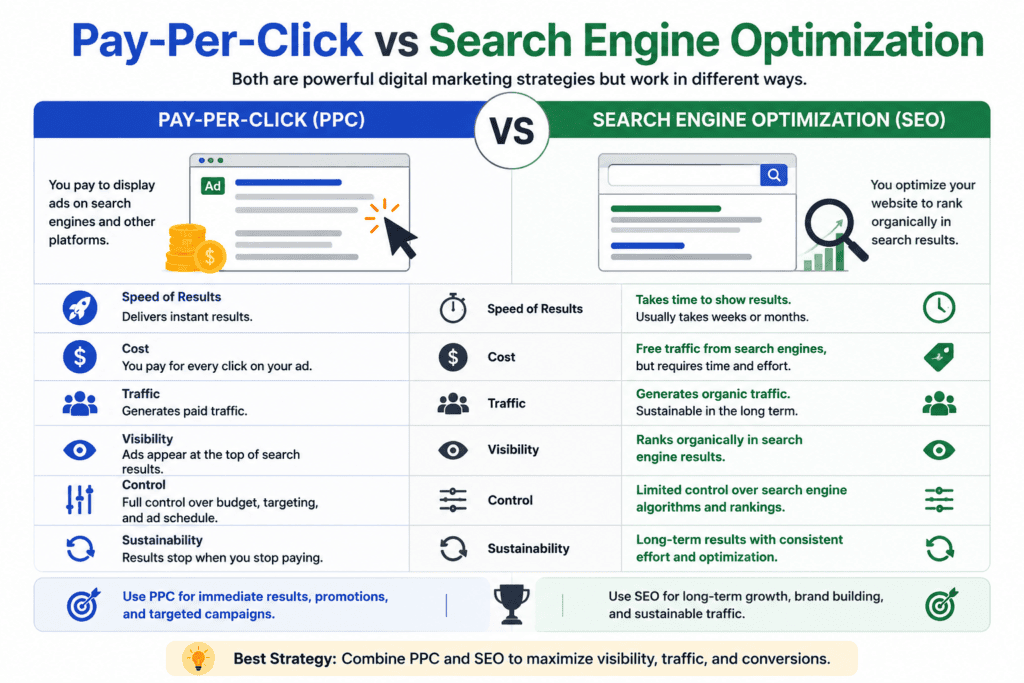
Many beginners confuse PPC with SEO, but both serve different purposes. SEO focuses on improving organic search rankings through content optimization, technical improvements, and link building. It requires consistent effort and usually delivers long-term results.
Pay-Per-Click, on the other hand, provides immediate visibility through paid advertisements. Businesses can appear at the top of search results within hours of launching campaigns. While PPC requires advertising spend, it offers faster lead generation and measurable performance.
Successful digital marketing strategies often combine SEO and PPC because together they maximize online visibility, traffic, and conversions.
Career Opportunities After Learning Pay-Per-Click
As businesses increase their online advertising budgets, demand for PPC professionals continues to rise. After mastering what is Pay-Per-Click, you can pursue careers such as PPC Executive, Google Ads Specialist, Performance Marketing Executive, Search Engine Marketing Specialist, Paid Media Analyst, Digital Marketing Executive, Campaign Manager, or Performance Marketing Manager.
Freelancers also benefit greatly from PPC skills by managing advertising campaigns for clients worldwide. Agencies, startups, e-commerce companies, and multinational corporations actively recruit professionals who understand Google Ads, keyword research, audience targeting, campaign optimization, and analytics.
Learning PPC creates opportunities across nearly every industry because paid advertising has become essential for business growth.
Why Learn Pay-Per-Click Through a Digital Marketing Course?
Although many free resources explain what is Pay-Per-Click, professional digital marketing courses provide structured learning with practical experience. A quality course teaches campaign creation, keyword research, bidding strategies, Quality Score optimization, landing page optimization, Google Ads setup, conversion tracking, remarketing, display advertising, shopping campaigns, and performance analysis.
Hands-on projects help students gain real-world experience while preparing them for industry certifications and job interviews. Experienced trainers also provide practical insights that cannot be learned through theory alone.
If your goal is to build a successful digital marketing career, learning PPC through a professional course significantly increases your confidence and employability.
Conclusion
Now that you understand what is Pay-Per-Click, it becomes clear why PPC is one of the most powerful digital marketing strategies for businesses of every size. It enables organizations to reach potential customers instantly, generate qualified leads, increase website traffic, improve conversions, and maximize return on advertising investment through highly targeted paid campaigns.
If you want to build a rewarding career in digital marketing, mastering what is Pay-Per-Click should be one of your priorities. A professional digital marketing course provides practical training, real-world projects, Google Ads expertise, campaign optimization techniques, and industry-recognized skills that employers actively seek. By learning PPC today, you prepare yourself for a future where performance marketing continues to drive business success.
Best SEO Service in Bangalore
Best SEO Service in Bangalore to Grow Your Business Online Table of Contents In today’s competitive digital market, having a strong online presence is essential
Best SEO Service in Mumbai
Best SEO Service in Mumbai: Grow Your Business with the Right SEO Strategy Table of Contents In today’s competitive digital market, having a website is
Best SEO Service in Grugram
Best SEO Service in Grugram: Grow Your Business Online with Professional SEO Table of Contents In today’s competitive digital market, having a website is not
Best SEO Service in Noida
Best SEO Service in Noida: Grow Your Business with Professional SEO Table of Contents In today’s competitive digital market, having a website is not enough
Best SEO Service in Delhi
Best SEO Service in Delhi: Grow Your Business with the Right SEO Strategy Table of Contents In today’s digital world, having a website is not
What Is Pay-Per-Click?
What Is Pay-Per-Click? A Complete Beginner’s Guide to PPC Marketing Table of Contents If you are exploring what is Pay-Per-Click, you are already taking an